
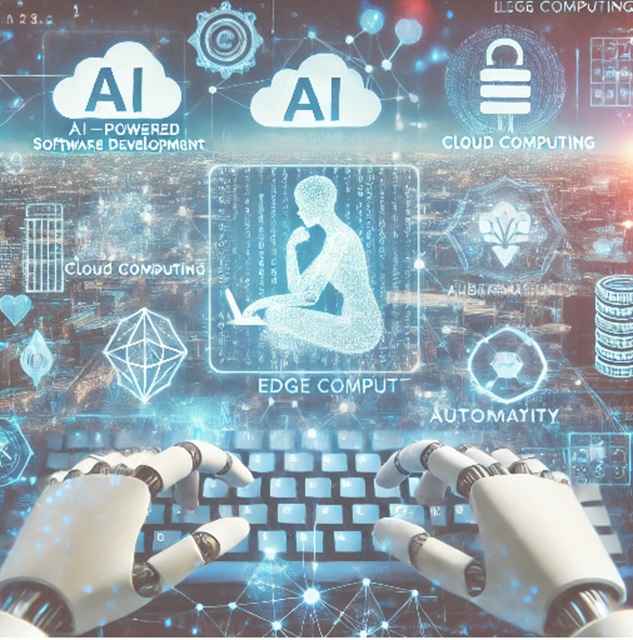
A glimpse at 2025 Software Development Trends and Projections
The software development landscape is in constant flux, with new technologies and methodologies emerging rapidly. As we move into 2025, several key trends are poised to reshape the industry, impacting how software is conceived, built, and deployed. This article explores some of the most significant trends and projections in the 2025 software development industry.
2025 Software Development trends
- The Ascendancy of AI-Powered Development
Artificial intelligence (AI) is no longer a futuristic concept in software development; it’s a present reality. In 2025 we can expect AI to become even more deeply integrated into the development lifecycle. AI-powered tools will assist with:
Code generation and completion: AI algorithms will be able to generate code snippets, complete functions, and even create entire modules based on developer input, boosting productivity and reducing development time.
Automated testing and debugging: AI will play a crucial role in automating testing processes, identifying bugs, and suggesting fixes, leading to higher quality software.
Predictive analysis and optimization: AI will analyze code performance, user behavior, and other data to predict potential issues and suggest optimizations, ensuring software is efficient and scalable.
- Low-Code/No-Code Platforms Gain Traction
Low-code and no-code platforms, which enable individuals with limited or no coding experience to build applications, are expected to gain significant traction in 2025. These platforms will empower:
Citizen developers: Business users and other non-programmers will be able to create applications to address their specific needs, fostering innovation and agility.
Rapid prototyping and development: Low-code/no-code platforms will accelerate the development process, allowing faster prototyping and quicker time-to-market.
Democratization of software development: These platforms will lower the barrier to entry for software development, making it more accessible to a wider audience.
- Cloud-Native Development Becomes the Norm
Cloud computing has already transformed the IT landscape, and in 2025, cloud-native development will become the dominant approach. This process involves building applications specifically for the cloud, leveraging:
Microservices architecture: It means breaking down applications into more minor, independent services that can be deployed and scaled independently.
Containers and orchestration: It implies using technologies like Docker and Kubernetes to package and manage applications in a portable and scalable manner.
Serverless computing: Utilizing cloud services that abstract away the underlying infrastructure, allowing developers to focus solely on code.
- The Continued Rise of JavaScript and Python
JavaScript and Python have been dominant forces in software development for years, and their popularity is expected to continue in 2025.
JavaScript: With its vast ecosystem of frameworks and libraries, JavaScript will remain the primary language for front-end web development and will continue expanding its reach in back-end and mobile development.
Python: Known for its simplicity and versatility, Python will continue to be a popular choice for data science, machine learning, and general-purpose programming.
- Increased Focus on Cybersecurity
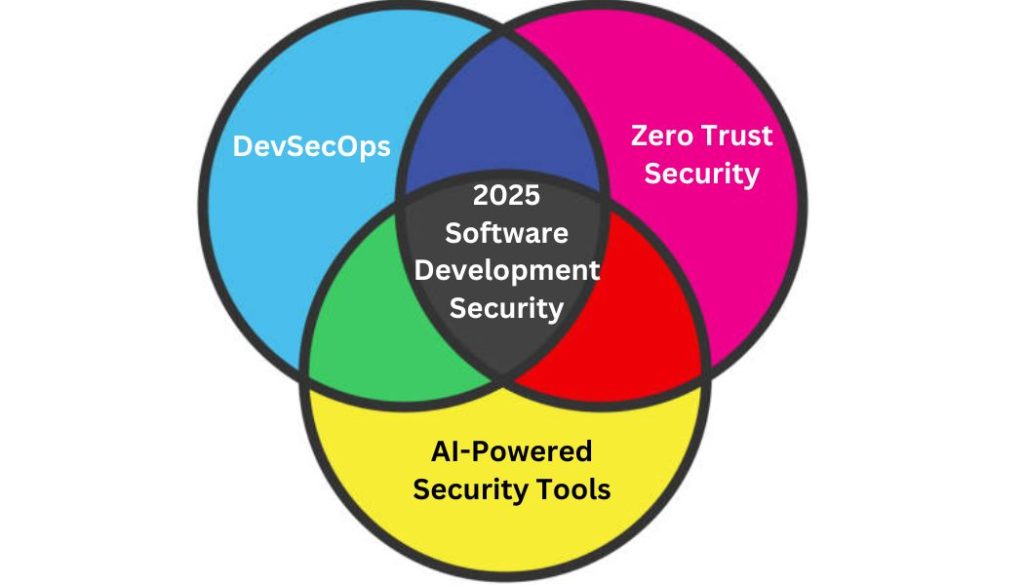
As cyber threats become more sophisticated, cybersecurity will be an even greater priority in 2025. This will lead to:
- The Emergence of Quantum Computing
While still in its early stages, quantum computing has the potential to revolutionize various industries, including software development. In 2025, we may see:
Early adoption in specific domains: Quantum computing may find initial applications in areas such as cryptography, optimization, and materials science.
Development of quantum algorithms and software: Researchers and developers will continue to explore and develop algorithms and software that can leverage the power of quantum computers.
Conclusion
The 2025 software development industry will be characterized by increased automation, greater accessibility, and a stronger focus on security and innovation. AI, cloud computing, and low-code/no-code platforms will be key drivers of change, empowering developers to build more powerful and sophisticated applications. While some trends are still emerging, it’s clear that the future of software development is bright and full of possibilities.
I hope this article on 2025 software development trends has been helpful to you. If you liked it or want to learn more about Deproinf, please subscribe to stay updated.
Subscribe to DeproinfIf you have specific needs, please GIVE US YOUR INFORMATION and we will contact you as soon as possible.
