

Cloud-Native Applications: The Future of Software Development
Cloud-native applications are rapidly becoming the standard for building and deploying software. But what exactly are they, and how do they differ from traditional cloud-based applications? In this article, we’ll explore the concept of cloud-native applications, their benefits, how to build them, and what we can expect in the future.
What Are Cloud-Native Applications?
Cloud Native applications are designed from the ground up to leverage the full potential of cloud computing. Unlike traditional applications that are often migrated to the cloud, they are specifically built for a cloud environment. They are composed of Microservices, which are small, independent, and loosely coupled services that communicate over a network. This architecture allows for greater flexibility, scalability, and resilience.
Difference between Cloud-Native and Cloud-Based Applications
The primary difference between cloud-native and cloud-based applications lies in their architecture and design principles. Cloud-based applications are typically monolithic, meaning they are built as a single, unified unit. They can be hosted on the cloud, but they don’t fully exploit the benefits of cloud computing, such as scalability and resilience.
On the other hand, cloud native applications are built as a collection of microservices, each running in its own container. This allows for better scalability, as each microservice can be scaled independently. It also improves resilience, as the failure of one microservice doesn’t necessarily bring down the entire application.
Benefits of Cloud Native Applications
Scalability: Cloud-native applications can easily scale up or down based on demand, ensuring optimal performance and cost-efficiency.
Resilience: The microservices architecture enhances the overall resilience of the application, as each service can be independently managed and maintained.
Flexibility: Developers can use different programming languages and tools for different services, providing greater flexibility in development.
Speed: Deployment and updates are faster and more frequent, enabling continuous improvement and faster time-to-market.
Cost-Efficiency: Efficient resource utilization and pay-as-you-go pricing models of cloud services can reduce operational costs.
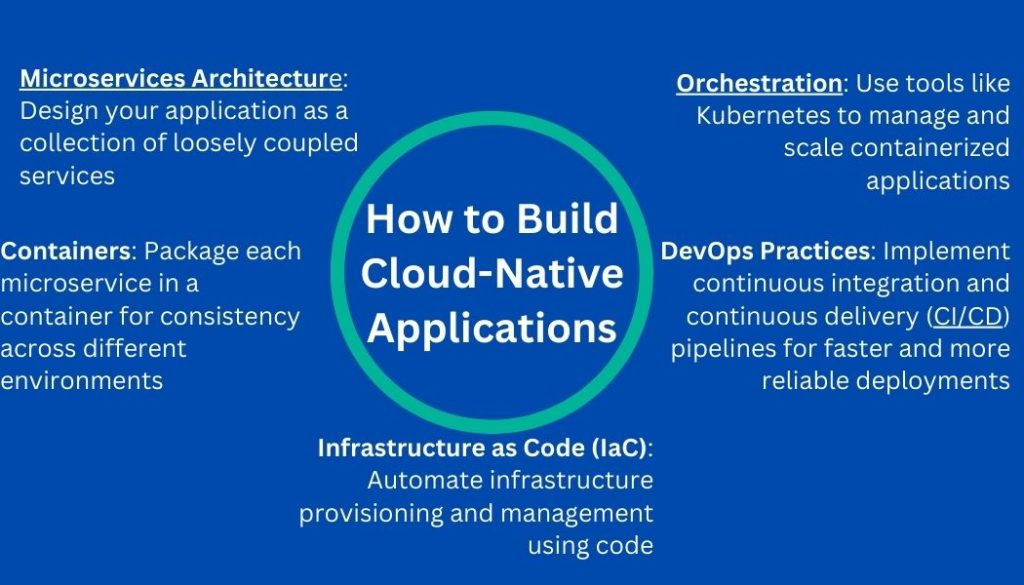
How to Build Cloud Native Applications
Building cloud native applications involves several key practices and technologies:
The Future of Cloud-Native Applications
The future of cloud native applications looks promising, with advancements in technology and growing adoption across industries. Here are some specific figures to support the claim that cloud-native apps are the future:
Market Growth:
- The cloud-native application market is expected to reach a staggering $34.03 billion by 2028, growing at a CAGR of 21.9% from 2023. (Source: MarketsandMarkets)
- Enterprise adoption of cloud-native technologies is on the rise, with 84% of organizations surveyed reporting they are using or plan to use containerization in their production environments. (Source: CNCF Cloud Native Survey 2022)
Benefits in Action:
- Netflix, a pioneer in cloud-native adoption, credits its cloud-native approach for achieving 99.99% uptime and rapid feature deployments.
- Spotify, another cloud-native champion, reports 50% faster development cycles and 20% reduced infrastructure costs thanks to its microservices architecture.
Efficiency and Performance:
- A study by McKinsey found that cloud native applications can lead to a 30% reduction in infrastructure costs and a 20% increase in developer productivity.
- Cloud-native architectures can achieve 10x faster deployment times compared to traditional approaches.
Conclusion
In conclusion, cloud-native apps represent the next generation of software development, offering numerous benefits over traditional and cloud-based applications. By embracing microservices, containers, and DevOps practices, organizations can build more scalable, resilient, and flexible applications.
I hope this article has been helpful to you. If you liked it, please subscribe to stay updated.
Subscribe to DeproinfIf you have specific needs or want to learn more about how Deproinf can help in your development projects, please GIVE US YOUR INFORMATION and we will contact you as soon as possible.
