

Open Source Software in Enterprise Applications: Balancing Innovation and Security
In today’s digital era, Open-source technology has become integral to enterprise applications because of its scalability, flexibility, and collaborative development. However, enterprises face distinct challenges in adopting OSS, particularly when balancing the benefits of innovation with potential security risks. In a previous article, I talked about OSS in the context of AI. In this article, I explore the role of open-source software in enterprise applications, including its advantages, challenges, and how businesses can effectively manage associated risks.
What is Open Source Software?
Open-source software is software whose source code is freely available for modification and redistribution. This accessibility fosters a collaborative environment where developers from around the globe contribute to its improvement.
Advantages of Open-Source Software in Enterprises
Cost Efficiency: One of the primary attractions of OSS is the reduced cost. Open-source solutions are generally free to use, and companies can often avoid high licensing fees associated with proprietary software. This cost efficiency is especially appealing for enterprises looking to deploy or scale solutions without significant upfront investment.
Flexibility and Customizability: Open source software allows enterprises to modify source code to fit their unique requirements, offering flexibility that proprietary solutions typically lack. This adaptability enables businesses to tailor applications to meet specific industry demands and operational needs.
Community and Collaboration: Open-source projects often have strong communities contributing to the software’s improvement and maintenance. This collective development effort can lead to rapid innovation as developers and users worldwide continuously refine and enhance the software. For enterprises, this community support can translate into quicker problem resolution and access to the latest technology.
Innovation and Speed: Open source software drives innovation, as enterprises can build upon existing codebases instead of creating new applications from scratch. This capability accelerates development, enabling companies to launch new features and adapt to market changes faster than with proprietary software.
Challenges of Open-Source in Enterprises
Security Vulnerabilities: While open source software offers numerous advantages, its open nature can expose it to security risks. Unlike proprietary software, whose code is closely guarded, open-source code is publicly accessible. This transparency allows for potential vulnerabilities, making it crucial for enterprises to ensure rigorous security protocols.
Compliance and Licensing: Open source software comes with various licenses (e.g., GPL, Apache, MIT) that specify terms for distribution, modification, and usage. Enterprises must understand and comply with these licensing agreements to avoid legal risks. Non-compliance could lead to unexpected liabilities, such as restrictions on code usage in proprietary systems.
Support and Maintenance: Although open-source communities can offer support, it’s often less predictable than the dedicated support services associated with proprietary solutions. Enterprises may need to invest in internal support teams or third-party providers to ensure that their OSS-based solutions are reliable and current.
Integration Complexities: Integrating open-source software with existing proprietary systems can pose technical challenges. Compatibility issues may arise, requiring additional customization to ensure seamless interoperability across an enterprise’s technology ecosystem.
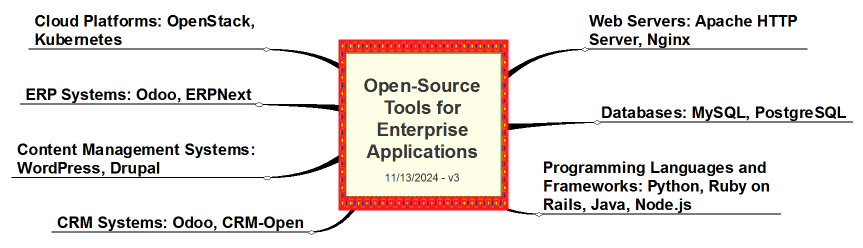
Popular Open-Source Tools for Enterprise Applications
Balancing Innovation and Security Risks
For enterprises, the key to successful OSS adoption lies in balancing the innovation and cost savings of open source with a strategic approach to mitigating security and compliance risks.
Implementing Robust Security Measures: To address security concerns, enterprises should adopt best practices for managing OSS vulnerabilities. This includes conducting regular code audits, applying patches promptly, and using tools to monitor for security alerts. Organizations can also establish a formal policy around OSS usage to guide teams on secure coding practices and vulnerability management.
Open Source Governance: Effective governance is essential for managing OSS usage within an enterprise. This includes tracking which open-source libraries and tools are used, ensuring compliance with licensing requirements, and setting guidelines for how teams can safely implement and maintain open source software. Governance frameworks help create a centralized approach to manage OSS resources, mitigate legal risks, and improve oversight.
Vendor and Community Support: Many open-source projects now offer paid support models through commercial entities or certified service providers. Enterprises should consider investing in support contracts for critical OSS components, ensuring timely updates and access to expert assistance. Engaging actively with OSS communities can also be beneficial, as companies that contribute to open-source projects often find they have more influence over the software future direction and support.
Leveraging Open-Source Management Tools: Specialized tools are available to help enterprises manage and monitor open-source dependencies within their software stack. These tools help detect vulnerabilities, manage licenses, and track compliance, giving enterprises more control over their open-source usage.
Training and Awareness: It is critical to educate developers and IT staff on open-source software’s benefits, risks, and management practices. By fostering awareness and understanding of OSS in the workforce, enterprises can ensure teams are equipped to use open-source solutions responsibly and securely.
Conclusion
Open-source software offers transformative potential for enterprises, enabling rapid innovation, cost savings, and flexibility that proprietary solutions may not provide. However, to maximize these benefits, enterprises must approach OSS adoption strategically, emphasizing security, compliance, and robust governance. By implementing effective open-source policies and management practices, Deproinf helps businesses to grow and maintain a competitive edge while safeguarding their data and infrastructure.
I hope this article has been helpful to you. If you liked it or want to learn more about Deproinf, please subscribe to stay updated.
Subscribe to DeproinfIf you have specific needs, please GIVE US YOUR INFORMATION and we will contact you as soon as possible.
