

Innovations in Software Testing Emerging Trends and Technologies
Software testing has undergone significant transformations in recent years, driven by the need for faster, more efficient, and high-quality software development. Emerging trends and technologies enable teams to deliver software products quickly and reliably. This article explores the latest innovations in software testing, including AI-driven testing, automation, and shift-left testing, and how they’re transforming the industry.
AI-Driven Software Testing
Artificial Intelligence (AI) is transforming software testing by introducing intelligent automation, predictive analytics, and machine learning algorithms. AI-driven testing enables teams to:
Auto-generate test cases: AI algorithms create test cases based on software functionality, reducing manual effort and increasing coverage.
Predictive testing: AI predicts potential defects and identifies high-risk areas, allowing teams to focus on critical testing.
Intelligent test data management: AI generates and manages test data, reducing data creation time and improving test accuracy.
Automation
Automation has been a cornerstone of software testing for many years, but recent advancements have made it more powerful and efficient than ever before. Automation tools can now perform a wide range of testing activities, including functional testing, regression testing, performance testing, and more.
One of the most notable trends in automation is the adoption of script-less test automation tools. These tools empower testers to create automated tests without the need for coding. With a visual interface to define test steps, they make testing more accessible to non-technical testers, enhancing their contribution to the process.
Another significant trend is automation integration into the DevOps pipeline, enabling continuous testing throughout the development lifecycle. By automating the testing process, teams can identify and fix defects earlier, reducing the overall cost of software development.
Shifting Left and Continuous Software Testing
The traditional testing approach often relegates testing to the later stages of development. Today, we’re witnessing a shift towards:
Shift-Left Testing: This approach integrates testing throughout the development lifecycle, from the design phase onwards. This enables early detection and resolution of bugs, saving time and resources.
Continuous Testing: Continuous Integration (CI) and Continuous Delivery (CD) pipelines involve frequent deployments. Continuous testing ensures that each new build is thoroughly tested before release, minimizing the risk of regressions.
Other Emerging Trends
As mentioned in our article about Software testing trends in 2024, there are some additional trends:
Cloud-based testing: Cloud infrastructure enables scalable, on-demand testing, reducing costs and increasing flexibility.
DevOps integration: Testing is becoming an integral part of DevOps, enabling continuous testing and delivery.
Service virtualization: Virtualized services enable teams to test dependent systems, reducing testing complexity.
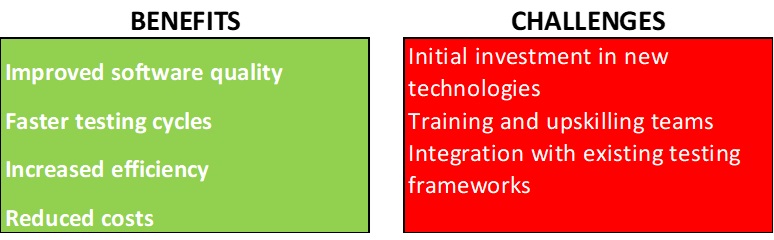
Benefits and Challenges
The adoption of these emerging trends and technologies offers numerous benefits. However, challenges also arise.
Conclusion
Innovations in software testing are transforming the industry, enabling teams to deliver high-quality software products quickly and efficiently. AI-driven testing, automation, shift-left testing, and other emerging trends are revolutionizing the testing landscape. As software development continues to evolve, teams need to stay informed and adapt to these innovations, ensuring they remain competitive and deliver exceptional software products.
I hope this article has been helpful to you. If you liked it or want to learn more about Deproinf, please subscribe to stay updated.
Subscribe to DeproinfIf you have specific needs, please GIVE US YOUR INFORMATION and we will contact you as soon as possible.
