

Robotic Process Automation (RPA): Streamlining Business Processes for Efficiency and Accuracy
Organizations are constantly seeking ways to improve efficiency, reduce costs, and enhance accuracy in their operations. Robotic Process Automation (RPA) has emerged as a powerful tool for achieving these objectives by automating routine and repetitive tasks. In this article, I delve into the basics of RPA.
What is Robotic Process Automation (RPA)?
Robotic Process Automation (RPA) is a technology that allows businesses to automate repetitive and mundane tasks by using software robots or “bots”. These bots can mimic human actions and interact with digital systems and software applications to perform various tasks such as data entry, processing transactions, and generating reports. The goal of RPA is to free up human employees from tedious tasks so they can focus on more strategic and value-added activities.
Key Features of Robotic Process Automation
Here’s a closer look at RPA and how it can benefit your business
- Non-intrusive: RPA bots can work with existing systems and infrastructure, requiring minimal changes to the current IT landscape.
- Scalability: Organizations can easily scale their RPA solutions up or down based on their needs, deploying more bots as the workload increases.
- Cost-effective: By automating routine tasks, companies can reduce labor costs and improve operational efficiency.
- Accuracy: RPA reduces the chances of human error, ensuring that tasks are performed with precision.
- 24/7 Operation: Bots can work around the clock, providing uninterrupted service and faster turnaround times.
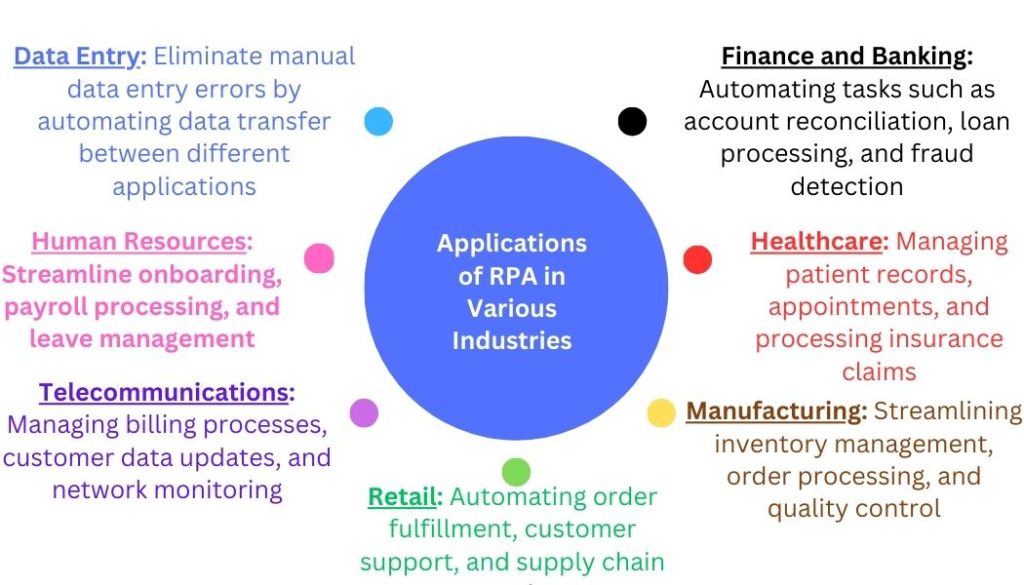
Applications of RPA in Various Industries
RPA is a versatile technology that can be applied across various industries and departments. Here are some common use cases:
Is Robotic Process Automation Right for Your Business?
RPA is a powerful tool, but it’s not a one-size-fits-all solution. Consider these factors before implementing RPA:
Identify Repetitive Tasks: Look for tasks that are rule-based, manual, and high-volume. These are prime candidates for automation.
Evaluate Costs and Benefits: Weigh the cost of implementing RPA against the potential benefits in terms of efficiency and cost savings.
Change Management: Ensure employees understand that RPA is meant to augment, not replace, their jobs. Effective communication and training are crucial.
Challenges and Considerations in Implementing RPA
While RPA offers numerous benefits, it is not without its challenges. Successful implementation requires careful planning and consideration of the following:
- Process Selection: Identifying the right processes for automation is crucial. Tasks that are rule-based, repetitive, and have high volumes are ideal candidates for RPA.
- Change Management: Implementing RPA may require changes in existing workflows and roles. Effective communication and training are essential to manage this transition.
- Governance and Compliance: Ensuring that RPA bots comply with regulatory requirements and company policies is critical to avoid legal and ethical issues.
- Maintenance and Monitoring: Regular monitoring and maintenance of RPA bots are necessary to ensure their continued efficiency and effectiveness.
The Future of RPA
The future of RPA is promising, with advancements in artificial intelligence (AI) and machine learning (ML) enhancing its capabilities. Intelligent automation, which combines RPA with AI and ML, is expected to enable more complex decision-making and predictive analytics, further revolutionizing business processes.
Conclusion
Robotic Process Automation (RPA) is a transformative technology that is reshaping the way businesses operate. By automating routine tasks, companies can achieve greater efficiency, accuracy, and cost savings. However, successful implementation requires careful planning and consideration of various factors. As RPA continues to evolve, its role in the digital transformation of industries will increase.
I hope this article has been helpful to you. If you liked it or want to learn more about Deproinf, please subscribe to stay updated.
Subscribe to DeproinfIf you have specific needs please GIVE US YOUR INFORMATION and we will contact you as soon as possible.
