

A Comprehensive Guide to Choose the Right Outsourcing Model
In previous articles, we have concluded that outsourcing has become an essential strategy for businesses seeking cost-effective solutions and access to a global talent pool. When considering outsourcing software development, one of the critical decisions you have to face is choosing the right outsourcing model. There are several options available, each with its own set of advantages and considerations. In this article, I explore the differences outsourcing models to help you determine which one best suits your needs.
Onshore Outsourcing
Onshore outsourcing refers to hiring external teams or professionals located within the same country or region as your business. This model offers several advantages, including:
- Proximity: Closer time zones and cultural alignment make communication and collaboration easier.
- Legal and Regulatory Compliance: Easier compliance with local regulations and standards.
- Quality: Higher quality due to shared language and cultural understanding.
However, onshore outsourcing can be more expensive than offshore options due to higher labor costs. It is a suitable choice when you prioritize quality, compliance, and easy communication but have a more flexible budget.
Offshore Outsourcing
Offshore outsourcing involves hiring teams or professionals from countries with significantly lower labor costs. This model is known for its cost-saving benefits, but it also comes with its own set of considerations:
- Cost Savings: Lower hourly rates and operating costs can result in substantial savings.
- Global Talent Pool: Access to a diverse talent pool with various skill sets.
Challenges in offshore outsourcing can include time zone differences, language barriers, and potential cultural differences. It is a good choice when cost-effectiveness and access to a wide range of skills are your top priorities.
Nearshore Outsourcing
Nearshore outsourcing strikes a balance between onshore and offshore models by choosing outsourcing partners in neighboring or nearby countries. This model offers a combination of benefits:
- Cost Savings: Lower labor costs than onshore, but potentially higher quality than offshore.
- Proximity: Relatively close time zones and cultural affinity for easier collaboration.
Nearshore outsourcing can be an excellent choice if you want to minimize cost while maintaining a degree of geographical and cultural closeness. It is suitable for companies that value both cost-effectiveness and effective communication.
Hybrid Outsourcing
The hybrid outsourcing model combines aspects of all the above options. It involves dividing your project into different phases and outsourcing each phase to the most suitable location. For example, you might handle critical development in-house or onshore while outsourcing non-core tasks offshore.
The advantages of hybrid outsourcing include:
- Flexibility: Tailoring your outsourcing approach to match each project’s specific requirements.
- Cost Efficiency: Balancing cost-effectiveness and quality by choosing the best location for each project phase.
Hybrid outsourcing is a versatile approach that allows you to optimize your outsourcing strategy for each project’s unique needs. It’s suitable for organizations with varying project requirements and budgets.
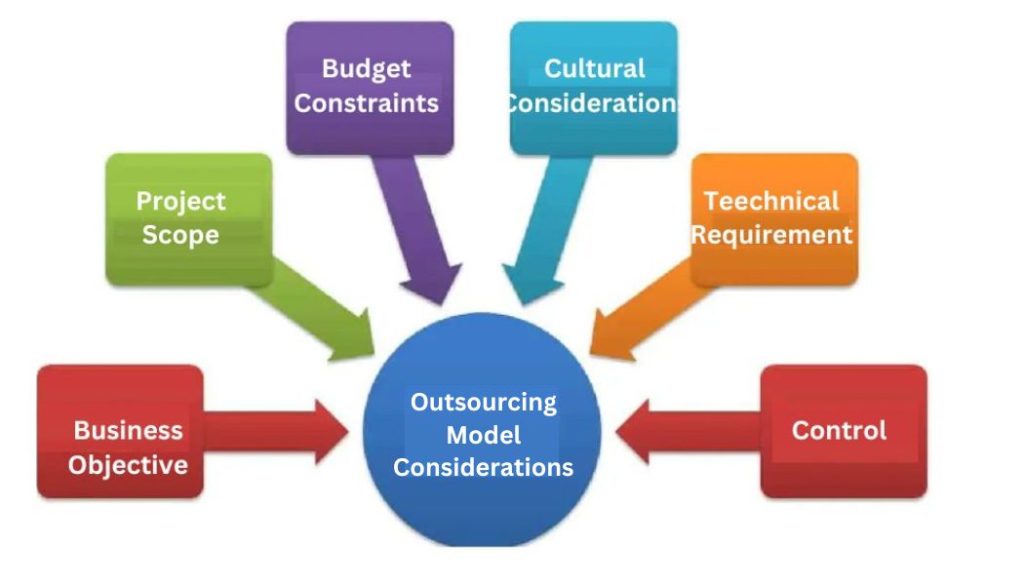
Determining the Right Outsourcing Model
There are 6 criteria you need to consider for deciding the beat outsourcing model for your business.
Conclusion
Choosing the right outsourcing model is a crucial decision that can significantly impact the success of your software development projects. Whether you opt for onshore, offshore, nearshore, or hybrid outsourcing, it’s essential to align your choice with your project’s objectives, budget, and communication requirements.
I hope this article has been helpful to you. If you liked it, please subscribe to stay updated.
Subscribe to DeproinfIf you have specific needs or want to learn more about how Deproinf can help in your development projects, please GIVE US YOUR INFORMATION and we will contact you as soon as possible.
